Our vision
All Gippsland's forests (native forests in parks and state forest, plantations and farm trees) are cared for appreciated because people are better informed and actively engaging in dialogue about their future.
Our purpose
To provide safe places for all Gippsland people to converse about forests, increase mutual understanding and explore and identify solutions to forest issues and challenges
Our value proposition
Supporting dialogues will increase mutual understanding, reduce conflict and improve leadership on forest matters
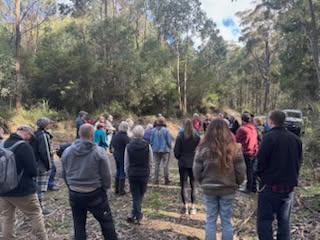
We are working to build trust through discussion, shared learning and approaching forest management issues from every point of view.
Our values
- To be inclusive (of all people and viewpoints)
- To be respectful (listen to others and encourage their participation)
- To consider all forest values (biodiversity, livelihoods, historic heritage, community enjoyment, natural resources, human life and safety and aboriginal cultural values and self determination)
- To take a whole of country perspective ( think at a landscape level)
- To be evidence based (value science, foster learning and adaptation)
Our strategic objectives
- Our product: to conduct dialogues consistent with the international forest dialogue model of engage, explore and change
- Conduct 2 dialogues annually
- develop and promote dialogue reports
- Our audience: the people in the Gippsland community and beyond, who value and want to care for all the regions forests
- Partner with the international TFD community
- Involve traditional owner perspectives and increase their participation and voice in dialogues
- Identify key local stakeholders to work with and collaborate for mutual benefit
- Grow and diversity the membership to better reflect the community and range of views and perspectives on our forests
- Our story: communicate with members and promote the value of dialogue with stakeholders, decision makers and the community
- Develop a communication strategy
- Maintain and update the GFD website
- Develop promotional and marketing material for the organisation
- Keep our members informed
- Establish as social media presence
- Speak direct to local stakeholders and community groups and forge collaborations
- Our organisation: establish a sustainable working model meeting all legislative requirements and member expectations
- Establish a work team to meet organisational needs ( up to 3 part time positions)
- Meet statutory requirements for a registered charity
- Establish finance and communication sub committees to report to the steering committee
- Develop a finance and investment plan, and a communication strategy
- Secure a stable and sustainable funding model
- Encourage succession in the Steering committee and introduction of new skills and experience
Policies and procedures
The point of using dummy text for your paragraph is that it has a more-or-less normal distribution of letters. making it look like readable English.
Reports (Financial and Annual)
The Gippsland Forest Dialogue aims to build understanding and agreement among stakeholders around the opportunities, challenges and knowledge gaps related to [the management and lack of management of] forests in Gippsland.
The Dialogue creates a space for diverse stakeholders to come together to talk about how best to look after the region’s forests, for people and planet, and to explore, agree on and facilitate collaborative actions that bring about these positive changes.
The Dialogue is independent and local. We have no government funding, no preconceived decisions or agendas and no collective association with peak bodies, interest groups, political parties or movements. We do not favour the interests of one group or sector and all options and opportunities are on the table. We want to learn from the lessons of the past and try to succeed where previous attempts have failed.
Our international partner - The Forests Dialogue - has facilitated more than 90 dialogues on contentious issues in forest management across the globe over the past 20 years. These are normally multi-stakeholder engagements over 1-4 days with a mix of field visits, presentations and facilitated discussions, working to identify common areas of agreement and disagreement (fracture-lines), discuss and hopefully break deadlocks and create real, meaningful change by giving participants the mandate to determine outputs and outcomes.